myCARI v2.1 Brings CGM-Powered Food Correlation, CPAP Sleep Analysis, and Mobility-Pattern Insights to Personal Health Tracking
The CARIHealth™ flagship app's largest feature release adds a personal food-glucose response database — the kind of insight specialized CGM apps charge $99–$200/month for — alongside CPAP sleep analytics, observation-only mobility alerts, supplement effectiveness tracking, and expanded care-team coordination.
LAS VEGAS, May 26, 2026 — MLPipes LLC today released myCARI v2.1, a major feature update to its personal health management app available on the Apple App Store. The release builds on myCARI's launch positioning — one subscription that replaces five or six single-feature apps — by adding longitudinal insights that turn the data myCARI already collects into something users can act on.
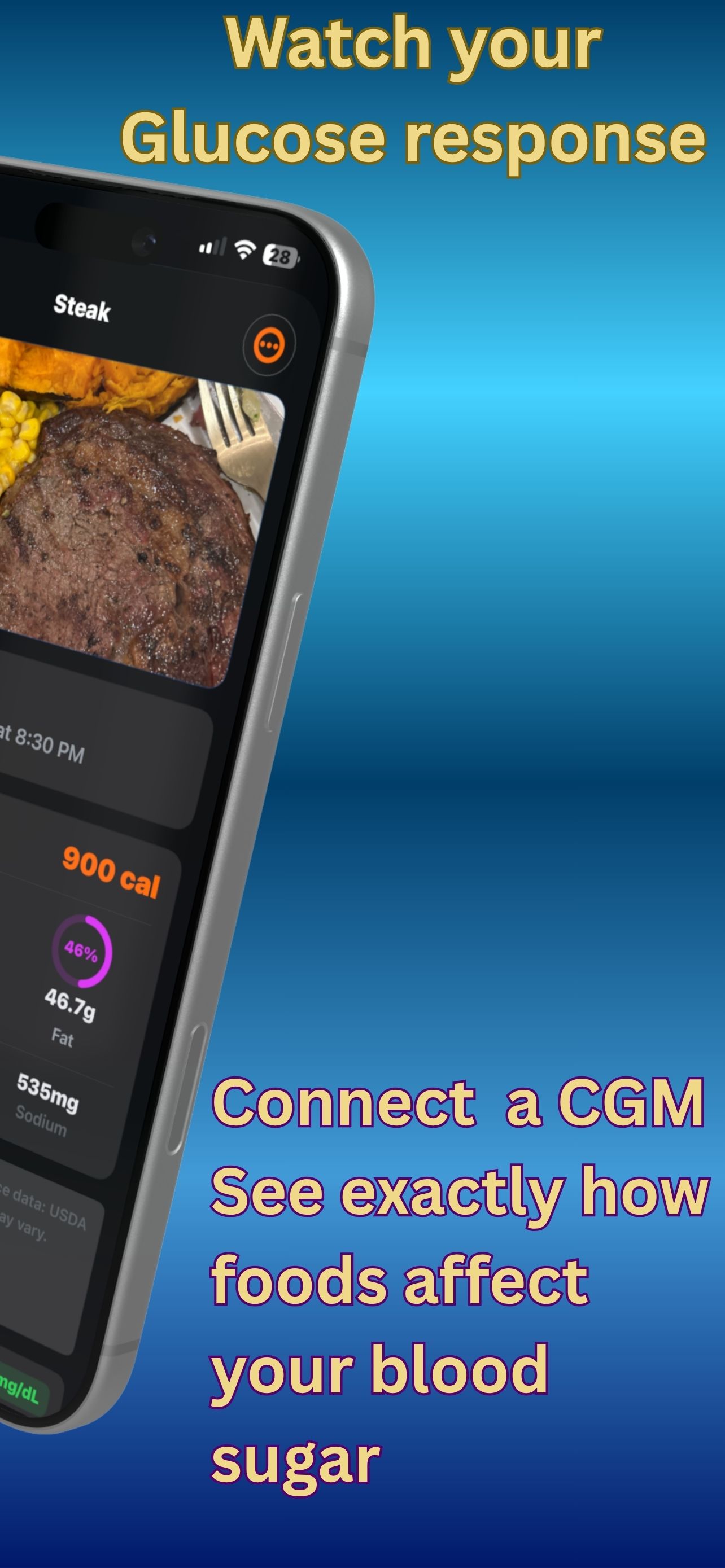
The headline addition is a personal food-glucose response database. For users with a connected continuous glucose monitor (CGM) — whether through Abbott Lingo, Dexcom Stelo, or any CGM that writes to Apple Health — myCARI now watches glucose for the two hours after each logged meal, computes how the user's body responded, and builds a personalized list of which foods consistently spike them and which keep them stable.
“Most CGM apps tell you your glucose number right now. The hard question is what your body does with the food you just ate, over and over, across hundreds of meals. That's the question dedicated services charge $99 to $200 a month to answer. We've built it into a $79.99 annual subscription that also covers medication management, sleep, safety, and care-team coordination.”
— Alfeo Sabay, Founder and CEO of MLPipes
What's New in v2.1
Foods That Spike You — personalized food-glucose response database
Every meal logged in myCARI with a connected CGM produces a 2-hour glucose response chart in the meal detail view: pre-meal baseline, peak, time-to-peak, and time-back-in-range. Over time, those individual responses aggregate into a per-user ranked list of foods grouped by their typical glucose impact, with confidence tiers indicating how many meals support each finding.
Use case: Maria, 52, is using a Lingo sensor and wants to understand which lunches are driving her afternoon energy crashes. After two weeks of logging meals, myCARI shows that her pasta lunches consistently produce an average peak of +62 mg/dL — with the “Building confidence” tag indicating six matching meals support the pattern. Her oatmeal-and-egg breakfasts, by contrast, appear on the “Foods that keep you stable” list. The framing throughout is observation-only: myCARI describes what her body did, not what she should eat. She shares the screen with her physician at her next visit.
“The whole product is built on a single discipline: describe, don't prescribe. We will tell you what your body did. We will never tell you what to eat. The user — with their physician, their dietitian, their family — gets to make the decision. Our job is to put the data they need in front of them.”
— Alfeo Sabay, Founder and CEO of MLPipes
CPAP Sleep Analysis with SpO2 overlay
For users on CPAP therapy who wear an Apple Watch to bed, myCARI now overlays oxygen saturation (SpO2) onto the nightly sleep stage chart, highlighting desaturation events synchronized with REM, Core, and Deep sleep transitions. Each night's data is preserved in a 30-night sleep history view alongside optional CPAP pressure logging, so trends across pressure-setting changes are visible at a glance.
Use case: Robert, 67, recently started CPAP and is dialing in his pressure settings with his sleep specialist. After each pressure adjustment, he and his doctor open his myCARI sleep history together to see whether the new setting produced fewer desaturation events through REM stages — turning a clinical guess-and-check process into a data-driven conversation.
Mobility Pattern Alerts — proactive, observation-only
myCARI continuously analyzes walking patterns from Apple Watch sensors and surfaces gradual changes in gait stability without ever telling the user they're declining or at risk. When the app notices a sustained pattern shift, it presents the observation to the user and — if they've authorized it — to their care team. Driving Awareness mode automatically pauses non-critical alerts when the app detects active driving. A post-fall recovery banner appears after any detected fall event, giving the user a low-friction way to confirm they're okay or call for help.
Use case: Linda, 78, lives independently. Over three weeks, her gait stability score gradually drops as she nurses a sore knee. Her daughter in Denver receives a gentle care-team observation: “Linda's walking patterns have shifted recently — worth checking in.” No clinical claim, no false alarm — just a prompt for a conversation that might otherwise wait until after an actual fall.
“Most fall-detection apps wait until someone has already fallen. By then, the conversation is about the hospital bill. We wanted a feature that gives the family a chance to talk before the fall — without crying wolf, and without ever claiming to predict anything medical. The pattern is what it is. The user and their family decide what it means.”
— Alfeo Sabay, Founder and CEO of MLPipes
Supplement Journey Card — does this actually work?
myCARI users spending $50–$200 a month on supplements now have a built-in way to evaluate them. The Supplement Journey Card pairs an objective tracked metric (deep sleep for magnesium, glucose stability for berberine, etc.) with weekly subjective check-ins and presents a smoothed 7-day moving-average trend chart with a baseline reference and a confidence tier (Low / Building / Strong). Milestone moments at day 7, 14, 30, 60, and 90 acknowledge the journey itself — outcome-agnostic, since not all supplements work for all people.
Use case: James, 41, takes magnesium glycinate for sleep. After 30 days, his Journey Card shows his nightly Deep Sleep up 18 minutes from baseline — with the “Strong signal” tier confirming the trend is supported by enough data to take seriously. He has evidence to make an informed continue-or-stop decision rather than guessing.
“Americans spend roughly $50 billion a year on supplements without any way to know if they actually work for them. myCARI already tracks the metrics most supplements claim to improve — sleep, glucose, stress, HRV. We just connected them. After 30 days you can see whether the bottle is doing what the label says, for you specifically. That's the kind of answer the supplement industry has avoided for a long time.”
— Alfeo Sabay, Founder and CEO of MLPipes
Daily Health Briefing — your data, in plain English, every morning
The morning briefing now incorporates the new food-glucose context, supplement journey data, and mobility observations alongside the existing sleep, activity, nutrition, and medication-adherence summary. The result is a single morning read of the user's prior day across every dimension myCARI tracks, written in observation-only language.
Use case: Each weekday morning, Priya, 38, opens myCARI before her first meeting and sees: yesterday's sleep efficiency was 88%, with REM up 12 minutes from her 7-day average; her glucose remained in range after lunch (a salad with grilled chicken) but rose 48 mg/dL after dinner (Thai noodles); her magnesium check-in is due Sunday. She has 30 seconds of context for her day before she touches a meeting.
Care Team v2 — log on behalf of a loved one
Care team members can now log meals (including photos), hydration, medication doses, and vital signs on behalf of the patient. Care team writes flow to the patient's account with the care team member recorded as the logger, and surface back to the patient's primary device on the next refresh. The full data set — meals, vitals, glucose, sleep, gait, supplements — is visible to care team members with the appropriate permissions, with the patient's own preferences (target ranges, displayed vitals, target weight) honored throughout.
Use case: David's mother in Florida calls to describe what she had for lunch. From his iPhone in Texas, David opens myCARI, switches to his mother's profile, photographs a similar plate, and logs it under her account. The meal appears on her primary device the next time she opens myCARI — and her afternoon medication-with-food window stays on track without her needing to log it herself.
“Care teams are how most chronic conditions actually get managed — by the adult kids checking in from another state, by the home-health nurse covering three patients, by the spouse who notices something the patient missed. We treat the care team as first-class. They get the same data, the same tools, and the ability to log on the patient's behalf when life gets in the way. That's not a side feature; that's how the app earns its keep.”
— Alfeo Sabay, Founder and CEO of MLPipes
Built on the Wearable You Already Own
A defining capability in v2.1: myCARI works with the wearable users already wear, not just one. Verified integration with Apple Watch and the Oura Ring is in place at launch — myCARI also reads health data from any device or app that syncs to Apple Health. That includes WHOOP, Garmin, the Hume Band, Fitbit, smart scales, blood-pressure cuffs, sleep mats, and most CGMs (Abbott Lingo, Dexcom Stelo, and others). Verification testing for additional named devices is in progress.
For glucose specifically, myCARI merges readings across all available sources, deduplicates by timestamp, and presents a single unified history. Users who switch sensor brands keep their full history intact. Target glucose ranges and alerts apply uniformly regardless of the underlying device.
“Roughly two-thirds of iPhone owners don't own an Apple Watch — and the gap is even wider among the older wellness audience that benefits most from a health app like myCARI. We built myCARI to meet users where they are. If you have an Apple Watch, it unlocks the most. If you have an Oura Ring, a WHOOP strap, a Garmin, or the Hume Band that's been all over Facebook ads — those work too. We will never tell someone they need to spend $400 on a wearable to get value out of our app.”
— Alfeo Sabay, Founder and CEO of MLPipes
Verified support varies by device. myCARI reads any metric written to Apple Health.
A Refreshed Visual Identity
myCARI v2.1 ships with a new app icon — a lowercase c with a heartbeat pulse line on a deep teal field — replacing the previous family-portrait icon. The refresh reflects the app's broadened focus from family-care positioning to comprehensive personal health, and reads cleanly at every Home Screen and Apple Watch size.
Availability and Pricing
myCARI v2.1 is available now as a free update for existing subscribers on the Apple App Store. New users receive a 14-day free trial.
For more information, visit carihealth.ai.

About MLPipes
MLPipes LLC is a company specialized in AI architectures focused on healthcare technology, based in Las Vegas, Nevada. The company develops the CARIHealth™ product portfolio — a suite of AI-powered health products designed to help individuals, families, and care professionals take an active role in managing health outcomes. myCARI is the flagship consumer product in the CARIHealth™ portfolio.
Website: mlpipes.ai | carihealth.ai
myCARI is a wellness app, not a medical device. Glucose response, sleep stage, mobility pattern, and supplement effectiveness data are observations based on available sensor information and are intended for informational purposes only. They do not constitute medical advice and should not be used for clinical decision-making, diagnosis, or treatment. Always consult your healthcare provider for medical concerns and before changing your diet, supplements, sleep therapy, or activity regimen. Apple Health integration requires HealthKit-compatible devices. Wearable integration: verified support for Apple Watch and Oura Ring at launch; additional devices that write to Apple Health (including WHOOP, Garmin, Hume Band, Fitbit, smart scales, and blood-pressure monitors) are supported via HealthKit but verification testing varies by device. CPAP sleep analysis, ECG, gait/fall detection, and continuous activity heart rate require Apple Watch. CGM features require a compatible continuous glucose monitor (Abbott Lingo, Dexcom Stelo, or any CGM that writes to Apple Health). FHIR import requires a participating healthcare provider. Care-team data sharing requires explicit patient consent and permission-level configuration.